

15 February 2026

The Bitcoin Ω-Score Is Back!

Plus, a look at the latest metrics added to the suite

The Bitcoin Ω-Score is back. By popular demand, we’ve finally integrated one of our most requested legacy tools into the new suite, alongside 5 other high-signal indicators.

Here I’m sharing 6 of my favourite metrics we’ve added recently. These tools range from mapping macro cycle intensity to tracking the fundamental energy-valuation of the network and the distress levels of long-term investors.

Here is a quick look at how they work and why they’re now essential fixtures in my daily workflow.
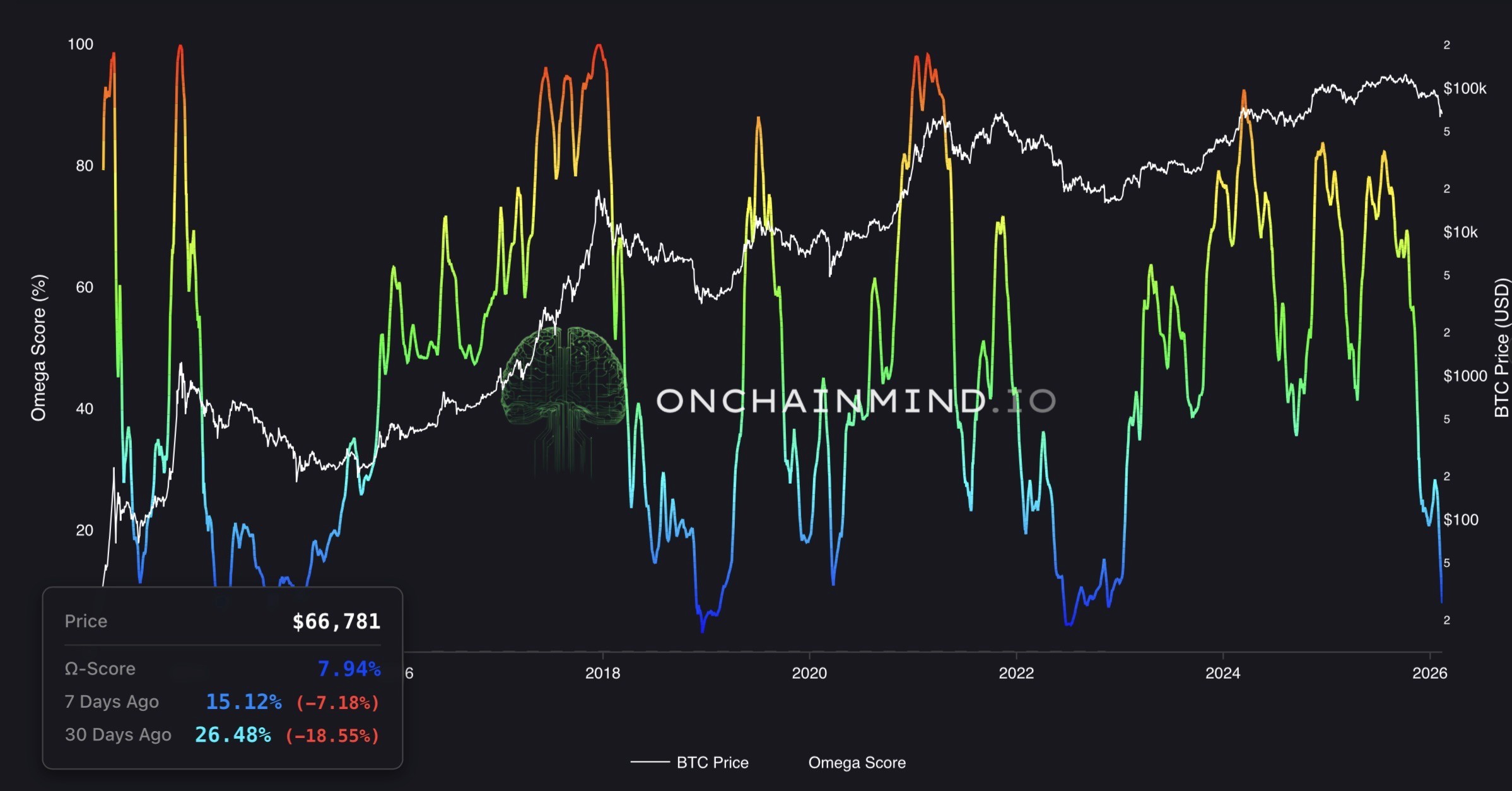
1. The Bitcoin Ω-Score

What it is: The return of our most popular high-fidelity composite model. It maps the structural intensity of Bitcoin’s market cycles by aggregating 10 distinct data components across on-chain, technical, and macro-cycle oscillators into a single, normalised risk score.

Why it’s useful: It acts as a definitive cycle roadmap. Using a 4-year rolling Z-score, it identifies generational value (Blue) and terminal speculative overheating (Red) with extreme precision, allowing you to ignore daily noise in favour of structural trends.

View Chart

1. The Bitcoin Ω-Score

What it is: The return of our most popular high-fidelity composite model. It maps the structural intensity of Bitcoin’s market cycles by aggregating 10 distinct data components across on-chain, technical, and macro-cycle oscillators into a single, normalised risk score.

Why it’s useful: It acts as a definitive cycle roadmap. Using a 4-year rolling Z-score, it identifies generational value (Blue) and terminal speculative overheating (Red) with extreme precision, allowing you to ignore daily noise in favour of structural trends.

View Chart

The Bitcoin Ω-Score

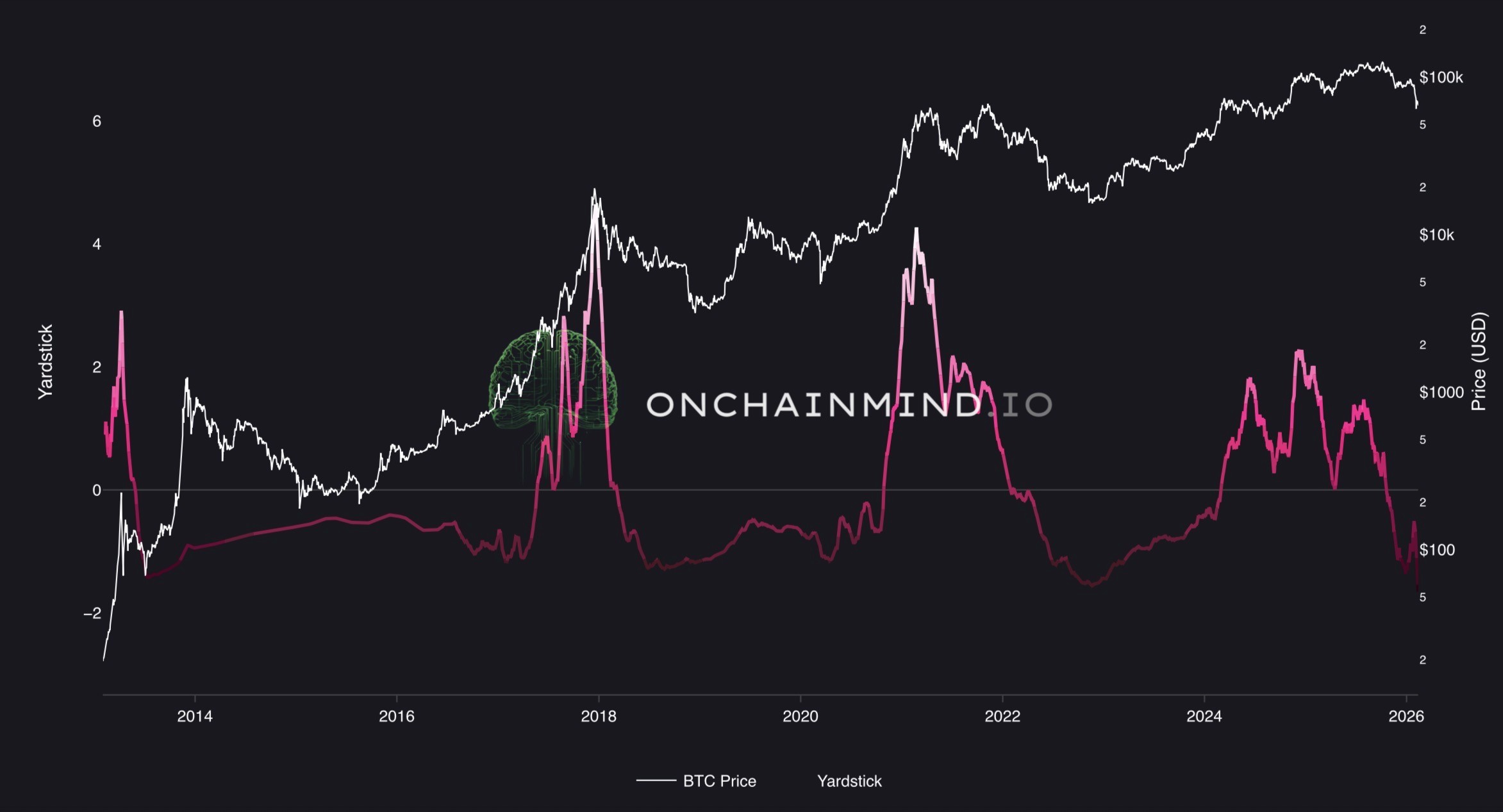
2. Bitcoin Yardstick

What it is: A fundamental valuation metric (inspired by Capriole Investments), known as “Bitcoin’s P/E Ratio", that measures the relationship between the network's Market Cap and the actual energy work (Hashrate) securing it.

Why it’s useful: It identifies when the market is overpaying for security. By normalising the ratio, it highlights structural extremes where price disconnects from physical network reality, signalling macro tops or deep accumulation windows.

View Chart

2. Bitcoin Yardstick

What it is: A fundamental valuation metric (inspired by Capriole Investments), known as “Bitcoin’s P/E Ratio", that measures the relationship between the network's Market Cap and the actual energy work (Hashrate) securing it.

Why it’s useful: It identifies when the market is overpaying for security. By normalising the ratio, it highlights structural extremes where price disconnects from physical network reality, signalling macro tops or deep accumulation windows.

View Chart

Bitcoin Yardstick

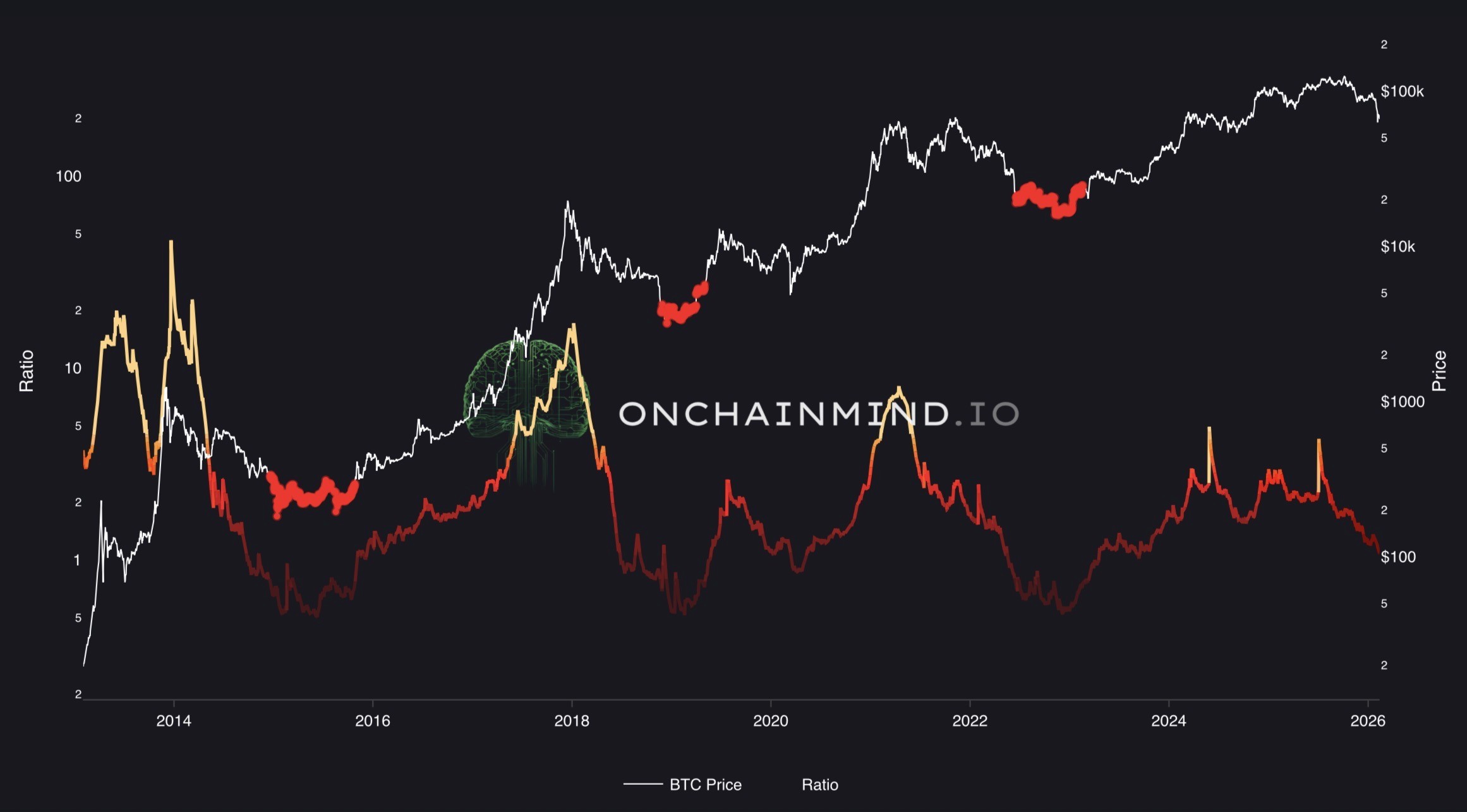
  1. LTH/STH SOPR Ratio

What it is: A macro-sentiment oscillator tracking the relative profit-taking behaviour between smart money (Long-Term Holders) and market liquidity (Short-Term Holders).

Why it’s useful: It distinguishes between healthy pullbacks and terminal peaks. Red signal dots highlight periods of extreme LTH distress, marking historical zones of structural undervaluation where speculators are actually out-earning veterans.

View Chart

  1. LTH/STH SOPR Ratio

What it is: A macro-sentiment oscillator tracking the relative profit-taking behaviour between smart money (Long-Term Holders) and market liquidity (Short-Term Holders).

Why it’s useful: It distinguishes between healthy pullbacks and terminal peaks. Red signal dots highlight periods of extreme LTH distress, marking historical zones of structural undervaluation where speculators are actually out-earning veterans.

View Chart

LTH/STH SOPR Ratio

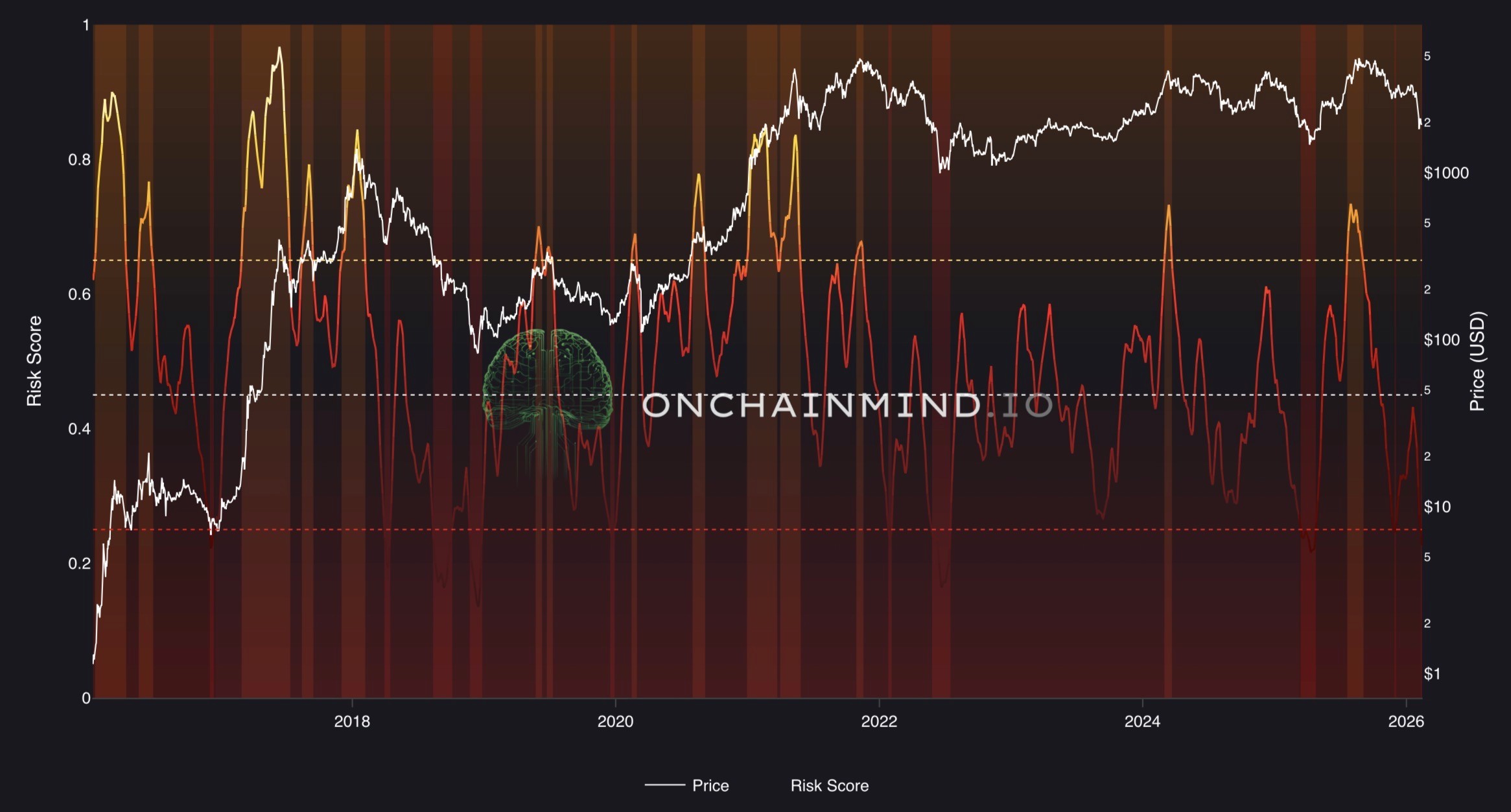
4. Altcoins Short-Term Risk Score

What it is: A composite risk gauge for any Altcoin aggregating 7 sub-metrics, both on-chain equivalents and technical, to capture the speed and direction of speculative pressure in the Altcoin market.

Why it’s useful: It provides a responsive oscillator for volatility. High, yellow-coded scores warn of unsustainable rallies and impending reversals, while crosses below the red baseline signal low-risk accumulation opportunities as speculative pressure eases.

View Chart

4. Altcoins Short-Term Risk Score

What it is: A composite risk gauge for any Altcoin aggregating 7 sub-metrics, both on-chain equivalents and technical, to capture the speed and direction of speculative pressure in the Altcoin market.

Why it’s useful: It provides a responsive oscillator for volatility. High, yellow-coded scores warn of unsustainable rallies and impending reversals, while crosses below the red baseline signal low-risk accumulation opportunities as speculative pressure eases.

View Chart

Altcoins Short-Term Risk Score

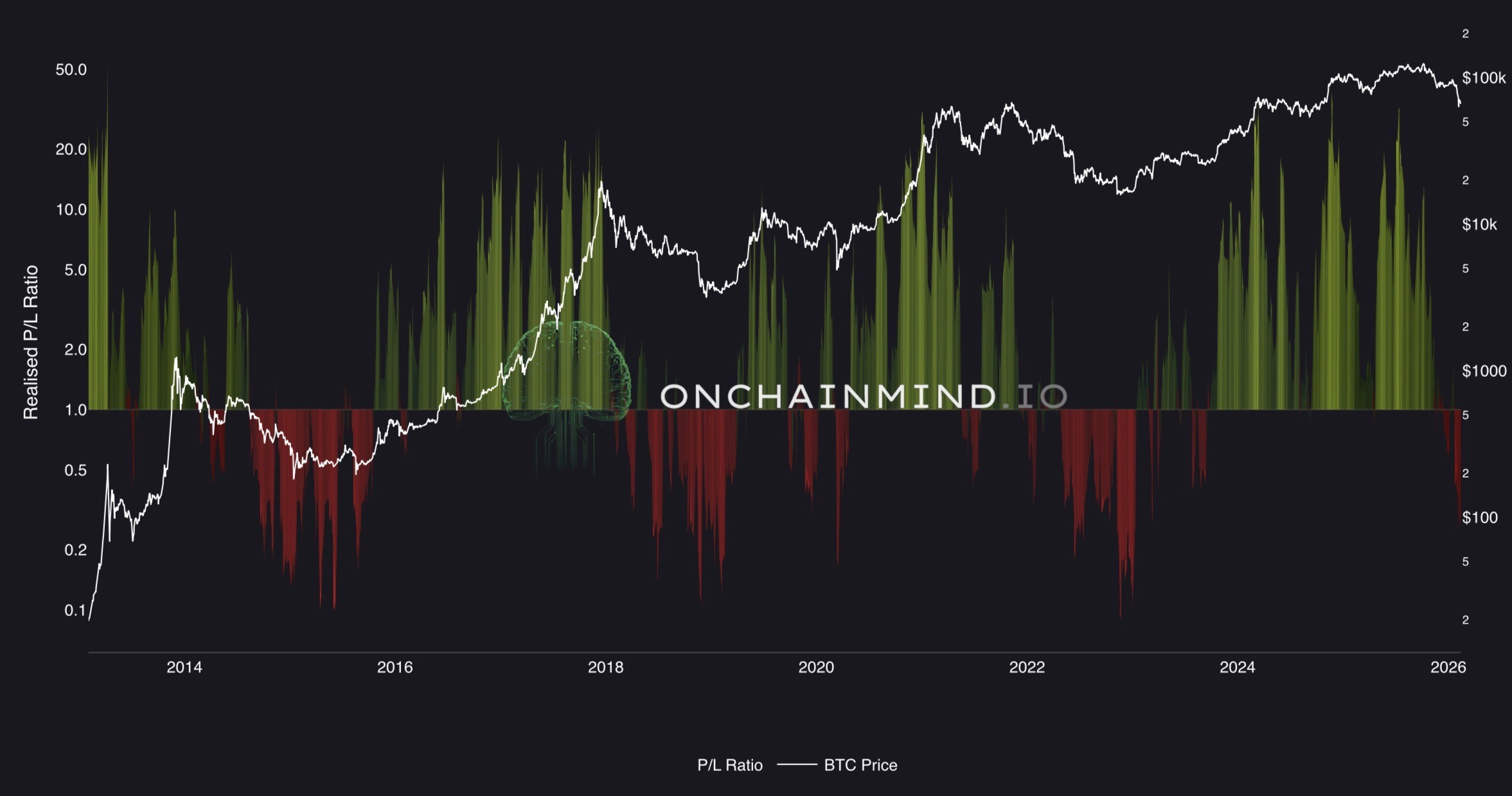
5. Realised Profit/Loss Ratio

What it is: A high-fidelity on-chain oscillator measuring the total dollar value of Bitcoin moved in profit relative to those moved at a loss, smoothed by a 14-day EMA to reveal capital flows.

Why it’s useful: It reveals the dominant market regime. A bullish flip well above 1.0 confirms the market has absorbed selling pressure, while dropping deep below 1.0 signals structural capitulation and the terminal stage of a bear market.

View Chart

5. Realised Profit/Loss Ratio

What it is: A high-fidelity on-chain oscillator measuring the total dollar value of Bitcoin moved in profit relative to those moved at a loss, smoothed by a 14-day EMA to reveal capital flows.

Why it’s useful: It reveals the dominant market regime. A bullish flip well above 1.0 confirms the market has absorbed selling pressure, while dropping deep below 1.0 signals structural capitulation and the terminal stage of a bear market.

View Chart

Realised Profit/Loss Ratio

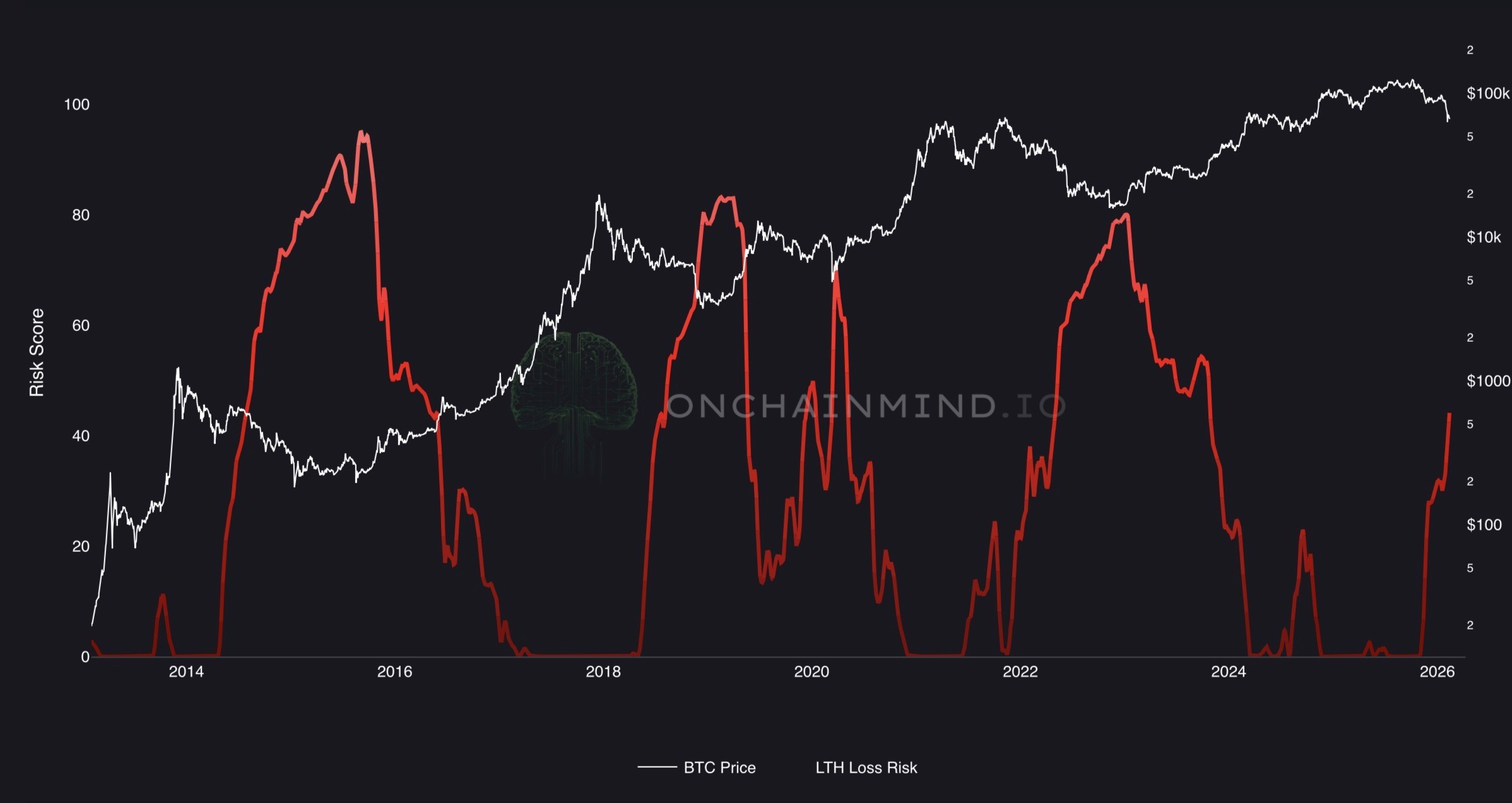
6. LTH Loss Risk Metric

What it is: A macro-sentiment tool that monitors the percentage of Long-Term Holder supply currently held at a loss to track deep financial distress among the most diamond-handed investors.

Why it’s useful: It functions as a powerful contrarian indicator. When the risk score hits 100% (signalling ~55% of LTH supply is underwater), it historically marks the absolute terminal floor of a Bitcoin bear market.

View Chart

6. LTH Loss Risk Metric

What it is: A macro-sentiment tool that monitors the percentage of Long-Term Holder supply currently held at a loss to track deep financial distress among the most diamond-handed investors.

Why it’s useful: It functions as a powerful contrarian indicator. When the risk score hits 100% (signalling ~55% of LTH supply is underwater), it historically marks the absolute terminal floor of a Bitcoin bear market.

View Chart

LTH Loss Risk Metric

As always, thank you for your continued support and for being part of this community. I’m excited to see how you integrate these new tools into your workflow to sharpen your edge in this market.

As always, thank you for your continued support and for being part of this community. I’m excited to see how you integrate these new tools into your workflow to sharpen your edge in this market.

Cheers,

Cheers,

Tom, On-Chain Mind


Tom, On-Chain Mind


DISCLAIMER

The content shared by On-Chain Mind is strictly for informational, educational, and entertainment purposes only. Nothing presented should be interpreted as financial, investment, legal, or trading advice of any kind. The cryptocurrency market is highly volatile and unpredictable. All opinions expressed are those of the author and do not constitute a recommendation to buy, sell, or hold any asset.

Past performance is not indicative of future results. You alone are responsible for your investment decisions. Always do your own research and never invest more than you can afford to lose.

PRIVACY POLICY: see Privacy Policy

TERMS OF USE: see Terms of Use